
Local
Flooring Upgrades for Huntsville's 1960s Space Age Ranch Homes
By Lucas Souza, Perfectum Floors
Published October 14, 2026
The short answer
Most Huntsville 1960s ranch homes were built with solid oak strip flooring, often buried under later carpet or vinyl. If the boards are sound and thick enough, refinishing beats replacing. But check the subfloor, watch for mid-century tile that may contain asbestos, and test moisture first.
Huntsville grew up fast in the 1960s. As Marshall Space Flight Center and the arsenal pulled engineers into town, whole neighborhoods of brick ranch homes went up across Madison County. Many are still standing, still solid, and still sitting on their original floors. If you own one, the good news is that what the builders put down is often worth saving. The catch is that it is usually buried under something newer, so the first job is figuring out what you actually have.
What flooring did Huntsville’s 1960s ranches actually come with?
The typical Space Age ranch was built with solid oak strip flooring — usually narrow, around two and a quarter inches wide, nailed over a plywood or plank subfloor. Builders ran it through the main living areas and bedrooms. Kitchens and baths usually got sheet vinyl or vinyl tile instead.
Not every ranch is the same. Some used square-edge oak and some tongue-and-groove; a few higher-end homes got parquet in a den or entry. And plenty of brick and split-level ranches around Huntsville sit on a slab, which changes what the builder could put down directly over the concrete.
Over sixty years, most of those oak floors disappeared under carpet. Shag in the seventies, berber in the nineties, and often a layer of pad and tack strip over perfectly good wood. Pull a vent register or peek inside a closet and you can usually see what is really down there before you commit to anything.
Can the original oak floors be refinished?
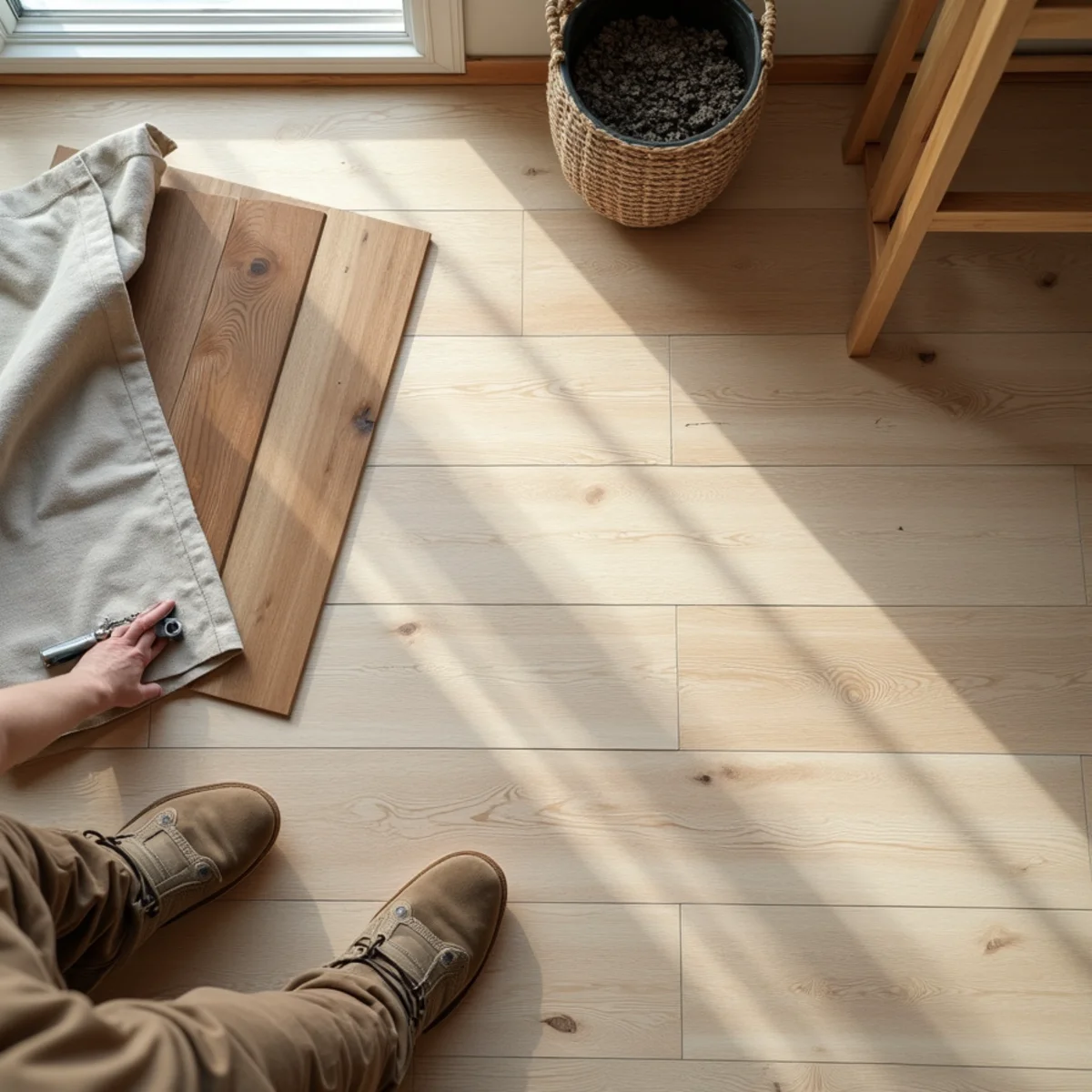
Usually, yes — and that is the best outcome. Solid oak can be sanded and refinished several times over its life. A 1960s floor that has only been sanded once or twice almost always has enough wood left for another pass. The National Wood Flooring Association treats refinishing as the default for sound solid wood, and sixty-year-old Huntsville oak is often exactly that.
Refinishing is not always a full sand. If the old finish is worn but the wood underneath is sound, a screen-and-recoat can freshen the surface without taking the floor down to bare wood. A full sand is for floors with deep scratches, stains or a flaking, uneven finish. A good installer tells you which one your floor actually needs instead of defaulting to the bigger job.
The limits are simple. If the boards have been sanded down near the tongue, if there is deep pet or water staining through the wood, or if too many boards are cracked or missing, refinishing stops making sense. At that point board replacement or a new floor is the honest call.
When boards do get replaced, matching matters. New oak will not carry the same patina as sixty-year-old wood until it is sanded and finished together with the rest. A good installer weaves replacement boards into the field instead of patching an obvious square, so the repair disappears under the new finish.
- Boards feel solid underfoot with no spongy give
- Few or no cracked, split or missing boards
- Enough wood above the tongue for another sanding
- Stains and scratches sit in the finish, not deep in the grain
- No widespread water damage, cupping or crowning
Not sure whether your ranch’s oak is worth saving? We check board thickness, subfloor and moisture before we recommend sanding or replacing. Call (904) 533-7260.
Call (904) 533-7260What’s hiding under the carpet or old vinyl?
This is where mid-century homes surprise people. Before you rip anything out, know what you are disturbing.
Mid-century tile can contain asbestos
Nine-by-nine floor tiles and the dark mastic glue under them were common in 1960s homes and can contain asbestos. So can some old sheet vinyl and its backing. Asbestos is only dangerous when disturbed, so do not dry-scrape, sand or demo it. Have suspect material tested by a lab first, and let a qualified abatement contractor handle removal if it tests positive.
You may also find particleboard underlayment under old kitchen vinyl, or a thin layer of dried adhesive on the subfloor. None of this means your project is doomed. It just means the demo and prep lines on your quote matter as much as the new floor itself.
Pet stains are the other common surprise. Carpet that sat over oak for years can trap urine that soaks through the finish and into the wood or even the subfloor. Surface stains sand out; deep black staining in the grain usually does not, and those boards get replaced. You will not know which you are dealing with until the carpet is up and the floor takes a first pass of sanding.
How do slab and crawlspace ranches change your options?
Huntsville ranches come both ways. Some sit on a concrete slab; many sit over a vented crawlspace. The subfloor decides what you can install and how much prep it needs.
On a slab, moisture moving up through the concrete is the main risk. Before any wood or glue-down vinyl goes down, the slab should be moisture tested — ASTM F710 is the standard the industry uses. On a crawlspace home, the questions are the humidity under the house and the condition of the wood subfloor, which can sag or soften after decades of Tennessee Valley summers.
The crawlspace matters even when you are only refinishing. A damp crawlspace keeps feeding moisture up into a freshly sanded oak floor, and the cupping comes right back. If the vapor barrier below is torn or missing, fixing it is part of protecting the floor you just paid to refinish.
| What you find | Likely path |
|---|---|
| Sound oak under carpet, good thickness | Refinish |
| Oak with surface scratches and old finish | Refinish or screen-and-recoat |
| Deep water stains or cupping through the boards | Replace affected boards, then refinish |
| Many cracked, missing or sanded-thin boards | Replace the floor |
| 9x9 tile or suspect mastic | Test for asbestos before touching |
| Soft, springy subfloor over a crawlspace | Repair the subfloor first |
What are your options if the oak can’t be saved?
Sometimes the wood is too far gone, or there was never hardwood in that room to begin with. That does not mean your only choice is more carpet. Modern floors can give a ranch a clean, updated look while handling the realities of an older home.
On a slab, rigid-core luxury vinyl plank is a strong pick. It is waterproof, forgiving of a slightly imperfect slab, and it installs over concrete once the moisture is checked. On a crawlspace home, engineered hardwood is often the smarter wood choice than solid, because its layered core handles humidity swings better. Both let you match the warm, low-profile look that suits a mid-century ranch without fighting the subfloor.
What should you expect during a refinish?
A refinish is dusty, scheduled work, not a quick afternoon. The crew sands the floor down, repairs or replaces bad boards, then applies stain if you want it and several coats of finish. Each coat needs time to dry, so a whole-house refinish spans several days from start to walkable.
Plan around the cure time. You stay off the floor while the finish sets, keep furniture out longer than you expect, and hold off on rugs until the finish fully hardens. Modern dust-containment sanding keeps the mess down, but an older ranch with return vents will still need a good cleaning afterward.
What should you check before you tear anything up?
Walk your own house first. A short inspection tells you whether you are looking at a weekend refinish or a bigger project, and it keeps a contractor’s quote honest.
- 1
Find the original wood
Pull a floor register or check a closet to confirm oak is under the carpet and see its condition.
- 2
Measure board thickness
More remaining wood above the tongue means more refinishing life left in the floor.
- 3
Test suspect tile and mastic
Have any 9x9 tile, dark mastic or old sheet vinyl lab-tested before disturbing it.
- 4
Check the subfloor
Look for soft spots, squeaks and sag, especially on crawlspace homes.
- 5
Test for moisture
Slab homes get a slab moisture test; crawlspace homes get a look at humidity and the vapor barrier below.
The bottom line on flooring a Space Age ranch
Huntsville’s 1960s ranches were built with real oak, and more often than not it is still worth refinishing. Save the wood where you can, replace it honestly where you cannot, and respect what mid-century homes can hide under the carpet. From Madison County to Hartselle, the homes that look best decades later are the ones where someone checked the subfloor and the moisture before the first board came up. Start with what is under your feet, and the rest of the decision gets a lot easier.
FAQ
Frequently asked questions
Services
Related flooring services
Service areas