
Core service
Restoring Heart Pine Floors in Older North Alabama Homes
By Lucas Souza, Perfectum Floors
Published October 14, 2026
The short answer
Restoring heart pine means assessing before you sand. These old-growth floors are often a century old and may have little thickness left, so you check remaining wood first. Then decide whether to keep the patina or sand to bare wood, patch missing boards with reclaimed pine, and finish gently.
Original heart pine is one of the best floors a North Alabama home can have, and it is almost always worth saving. This is dense old-growth longleaf pine, with a grain and amber color you cannot buy new. But it is also old, often thin, and quirky to refinish — so restoring it well starts with assessing, not sanding.
What makes heart pine different to work with?
Heart pine is cut from the dense inner heartwood of old-growth longleaf pine, trees that grew slowly over centuries. That gives it tight grain, real hardness for a softwood, and a deep amber tone that darkens with age. Most of what you find in older homes around Gurley and Decatur has not been milled in generations.
It is still softer than oak, so it dents and shows wear more readily. It also takes stain unevenly, prone to blotching in a way oak is not. And because these floors are old, many have already been sanded several times — which is the first thing you have to reckon with.
Fastening is part of the character too. Many old heart pine floors were face-nailed with cut nails, and those square nail heads are a detail worth keeping, not hiding. Others are blind-nailed through the tongue. Knowing which you have changes how boards come up and go back down during a repair.
Have original pine you want to bring back? We assess the remaining thickness, test how it takes finish, and tell you honestly whether to sand, patch or simply recoat. Call (904) 533-7260.
Call (904) 533-7260
Can my old pine floors be sanded again?
Maybe — and that is the whole point of checking first. Every full sanding removes wood, and a floor that is a century old may have been sanded two or three times already. There is a limit: once you reach the top of the tongue-and-groove, the boards are ruined and hard to replace.
Before anyone starts a drum sander, someone should check the remaining thickness where it is visible — at a floor vent, a threshold, or a doorway edge. If the wood is thin, the answer is not a full sand. It is a gentle screen-and-recoat, or a buff, that refreshes the finish without eating into irreplaceable wood.
Watch for the signs a floor has already been sanded thin. Nail heads sitting proud of the surface, boards that flex underfoot, or a tongue edge peeking out at the seams all say the wood is near its limit. When you see those, screen-and-recoat is the move — not a drum sander that could take the last of the board.
Should you restore the patina or sand to bare wood?
This is a judgment call, and it is worth making on purpose. A full sand to bare wood gives you a clean, even, bright floor — but it erases a century of patina and uses up precious thickness. Keeping the patina preserves the character and the wood, and often a clean and recoat is all a sound old floor needs.
Many of the best heart pine restorations do the least. If the finish is just tired and the boards are sound, a screen-and-recoat brings back the glow without the dust, the cost, or the wood loss of a full sand. Save the full sand for floors that are genuinely damaged, stained through, or badly worn — and only if the thickness allows it.
How do you handle damaged or missing boards?
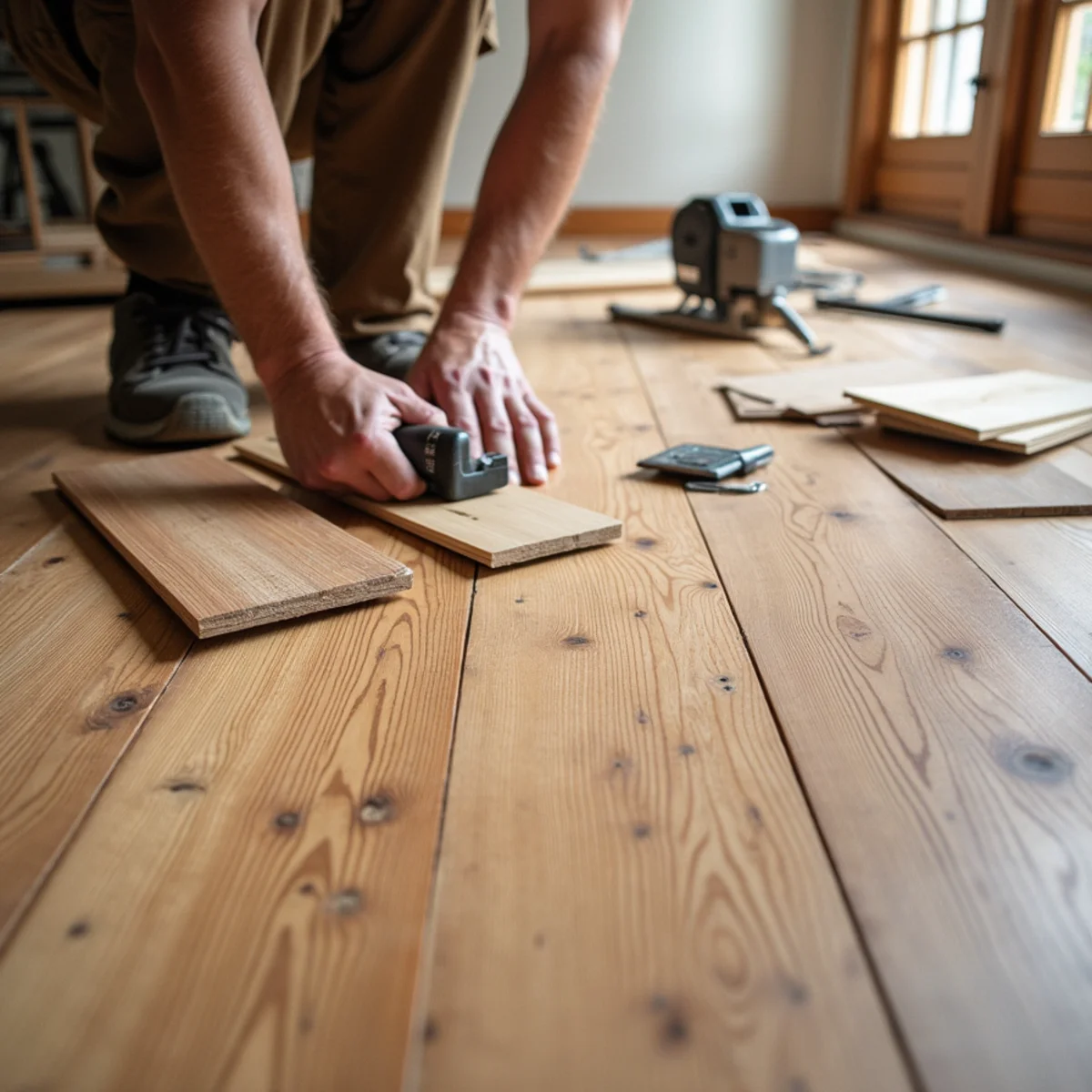
Old floors come with gaps, cut-nail holes, splits and the occasional missing board. You do not want to patch century-old pine with new lumber — the color and grain will never match. Reclaimed heart pine is the answer, and the repair follows a careful sequence.
- 1
Source reclaimed pine
Match replacement boards from reclaimed heart pine of similar width, grain and age so the patch blends.
- 2
Cut out cleanly
Remove damaged boards without disturbing sound neighbors, keeping the tongue-and-groove intact where possible.
- 3
Fit and fasten
Cut each replacement to fit and secure it the way the floor was built — often face-nailed on these old installs.
- 4
Address the gaps
Decide which seasonal gaps to leave as character and which to fill, since pine moves with humidity year-round.
- 5
Blend and finish
Feather the repair into the surrounding floor, then stain or finish so the patch disappears into the whole.
How do you protect heart pine once it’s restored?
A restored pine floor lasts on maintenance, not miracles. Keep grit off it — grit is sandpaper underfoot, and a soft wood like pine shows it fast. Felt pads under the furniture, mats at the doors, and a no-shoes habit do more for the floor than any finish you can buy.
Humidity control matters as much as it does for any wood floor. Pine moves with the seasons, so holding indoor humidity steady keeps gaps and cupping in check around Gurley and Decatur. And when the finish eventually dulls, a screen-and-recoat refreshes it without touching the wood — the gentle path that lets a century-old floor keep going.
Measure the wood before the sander comes out
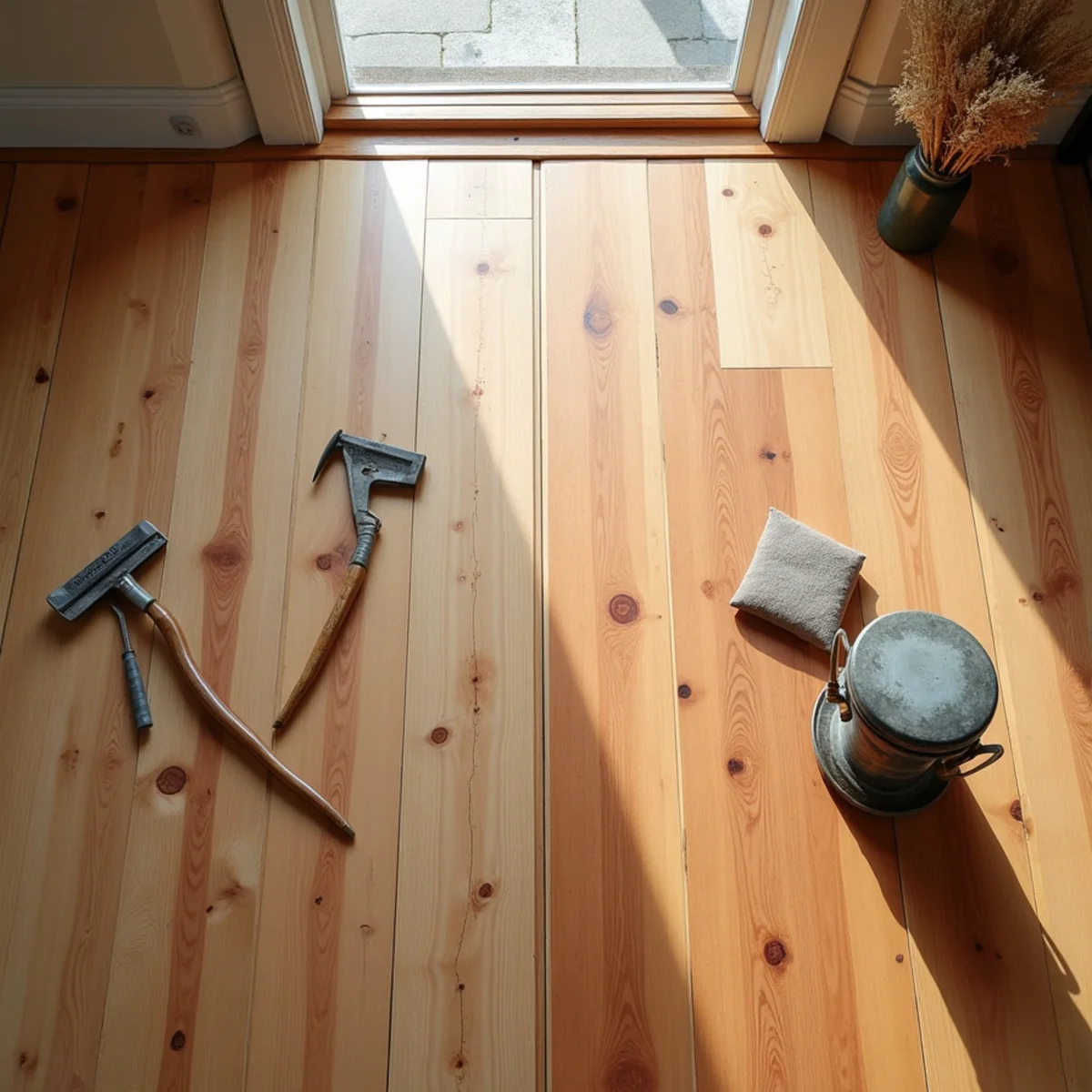
The single most expensive mistake on an old pine floor is sanding through the top of the tongue-and-groove. Once that happens, boards lose their grip and must be replaced with hard-to-find reclaimed stock. Have the remaining thickness checked at a vent or doorway first. A century-old floor may have only one gentle sanding, or none, left in it.
What should you check before you start?
Run this list before committing to a plan. Each answer changes whether you sand, screen, patch or simply protect what you have.
- How much wood is left above the tongue-and-groove?
- How many times has the floor likely been sanded already?
- Are there missing or badly damaged boards that need reclaimed pine?
- Do you want an even, uniform look, or to keep the aged patina?
- How will the pine take stain — test a hidden area for blotching first?
- Is indoor humidity steady, so a restored floor won’t gap and cup after?
That stain test matters. Pine’s blotchy nature means a color you love on a chip can look uneven on the floor, so a conditioner or a natural oil finish is often the smarter route. Finish choice is its own decision.
| Finish | Look | Trade-off |
|---|---|---|
| Penetrating oil / hardwax oil | Natural, matte, warm | Needs occasional reapplication, easy to spot-repair |
| Oil-based polyurethane | Amber, durable sheen | Ambers further over time, harder to spot-fix |
| Water-based polyurethane | Clear, keeps color truer | Less amber warmth some owners want on pine |
The bottom line on restoring heart pine
Original heart pine is worth the care it takes, and the care starts with restraint. Check the remaining wood before anyone sands, keep the patina when the floor is sound, and patch only with reclaimed pine so repairs disappear. Test how the boards take finish, pick a finish that suits a soft, warm wood, and hold your indoor humidity steady afterward. Done that way, a floor that has already lasted a century in North Alabama is set up to last another.
FAQ
Frequently asked questions
Services
Related flooring services
Service areas