
Cost & Insurance
Refinish or Replace Hardwood? A Huntsville Cost Comparison
By Lucas Souza, Perfectum Floors
Published October 14, 2026
The short answer
Refinishing sands and recoats your existing hardwood and is generally the lower-cost, faster option when the boards are sound and thick enough. Replacing means new material and removal, so it costs more and takes longer. The deciding factor is the condition and remaining thickness of your wood, not price alone. A written quote gives the exact numbers.
Your hardwood looks tired, and you are weighing whether to refinish what you have or tear it out for something new. Refinishing is usually the cheaper and faster route, but only when the wood can take it.
This guide explains the difference, what drives the cost of each, and how to tell which your Huntsville-area floor actually needs. No invented prices here — material, prep and room count vary too much for an honest per-foot number, so your written quote supplies the exact figures for your home.
What is the difference between refinishing and replacing?
Refinishing keeps your existing boards. The old finish and a thin layer of wood are sanded off, any repairs are made, and a fresh stain and finish go on. Replacing pulls the old floor out entirely and installs new material in its place. One renews what you have; the other starts over.
Because refinishing reuses the wood and skips removal and new material, it is generally the lower-cost choice. But it is only possible when there is enough sound wood left to sand. That is the real fork in the road, and it is a question about your floor, not your budget.
There is a middle option many homeowners miss: a recoat, sometimes called a screen-and-coat. If the finish is worn but the wood is not damaged, a light buff and a fresh top coat can renew the look without a full sanding. It is the least expensive path of all when the floor qualifies.
Which of the three you need is a question about condition, and it is worth getting right. Pay for a full replacement when a refinish would have done, and you overspent; try to recoat a floor that needed sanding, and the fix fails fast. An honest assessment of the wood is what keeps you from either mistake.
Keep in mind the two are not always either-or. On a larger home you might refinish the hardwood that is holding up and replace the worn rooms with matching or complementary flooring. A good contractor will walk the house and tell you where each makes sense rather than selling one answer for everything.
Not sure whether your hardwood can be refinished or needs replacing? We check the wood thickness and condition and give you an itemized quote for each path. Call (904) 533-7260.
Call (904) 533-7260
When can you refinish instead of replace?
Refinishing is on the table when the boards are structurally sound and there is enough thickness left to sand. Solid hardwood can usually be refinished several times over its life; engineered hardwood has only a thin real-wood top layer, so it can take far fewer passes, if any.
- Surface scratches, dullness and worn finish — ideal refinish candidates
- Minor cupping that has dried flat — often refinishable
- Solid hardwood with plenty of thickness above the tongue
- A floor you like the layout and species of, just not the finish
- A few damaged boards that can be swapped before refinishing
Replacing becomes the answer when the wood is too thin to sand again, when boards are buckled or rotted, when the subfloor is damaged, or when an engineered floor has worn through its top layer. At that point sanding has nothing left to work with.
Wanting a different look is also a legitimate reason to replace, not refinish. Refinishing can change your stain color, but it cannot change the board width, the species or a tired layout. If you want wide planks where you have narrow strip, that is a replacement no matter how good the old wood is.
Gaps between boards are their own question. Narrow seasonal gaps that open in winter and close in our humid summers are normal and do not call for replacement. Large, permanent gaps, or boards that have separated and will not close, point to an installation or moisture problem that a refinish alone will not solve.
What drives the cost of each?
There is no honest single price per square foot for either job — both depend on your rooms and your wood. But the cost drivers are predictable, and knowing them lets you read a quote instead of guessing. Refinishing generally lands below replacing because it skips new material and removal.
| Factor | Refinishing | Replacing |
|---|---|---|
| Material | Stain and finish only | All-new flooring material |
| Removal / haul-away | None | Tear out and dispose of old floor |
| Labor | Sanding, repair, finishing | Removal, subfloor prep, new install |
| Relative cost | Lower | Higher |
| Subfloor work | Rarely needed | May be needed once old floor is up |
Within refinishing, the big swing is how much repair and how many coats the floor needs. A simple recoat is cheap; a full sand with board swaps, stain and multiple finish coats is more. The species and the finish you choose move the number too.
Within replacing, the swings are material grade and what the tear-out reveals. A high-end wood costs more than a builder-grade floor, and a subfloor that needs leveling or repair adds a line you cannot see until the old floor is up. That is why a replacement quote should spell out prep as its own item.
Room count and layout move both numbers the same way. Many small rooms, closets, stairs and transitions mean more edge work, more cut-in sanding or more trim, so a house chopped into small spaces costs more per square foot than one open area — whether you refinish or replace. It is the labor, not just the material, doing the work.
Refinishing has a limit
Every refinish removes a little wood. Solid hardwood can take several passes over its lifetime; engineered flooring has a thin wear layer and far fewer, if any. If your floor has already been sanded down thin, refinishing again may not be safe — and that is the moment replacing becomes the smarter spend, not the cheaper one.
How long does each take?
Timeline matters as much as cost when you are living in the house. Refinishing is usually the quicker project, but it has dry and cure time you have to respect. Replacing takes longer because there is removal and a full install on top of finishing.
- Refinishing — sanding and coats over a few days, plus cure time before heavy use and furniture
- Replacing — removal, subfloor prep, install, then finishing if site-finished, over a longer stretch
- Dust control — dustless sanding keeps a refinish livable; a replacement is more disruptive
- Cure time — do not rush furniture back onto a fresh finish; it needs to harden
Either way, plan for the floor to be off-limits while finish cures. Walking or placing furniture on a finish before it hardens is a common way to ruin a brand-new job. The exact window depends on the finish, so ask your contractor which they are using and how long it needs.
Plan your living arrangements around the whole job, not just install day. During a refinish you often cannot walk the floor for a stretch and cannot place furniture for longer, so a one-room refinish is livable while a whole-floor job may mean staying elsewhere for a few nights. Ask for a realistic day-by-day so you are not caught out.
Which choice protects your home’s value?
Both can, in different situations. If you have solid hardwood in good shape, refinishing restores a feature buyers want for a fraction of replacement cost — that is strong value. There is rarely a reason to tear out sound wood.
If the existing floor is worn out, thin, or a dated engineered product, replacing with quality flooring can do more for resale and daily living than chasing one more refinish out of a floor that is spent. The value play is to match the spend to the condition of what you have, which is exactly what an honest assessment gives you.
Buyers around Huntsville tend to respond well to real hardwood in good condition, which is an argument for preserving sound wood when you can. But a worn, patched floor can read as deferred maintenance and work against you. The move that protects value is the honest one — restore what is worth restoring, replace what is spent.
The bottom line on refinish vs replace in Huntsville
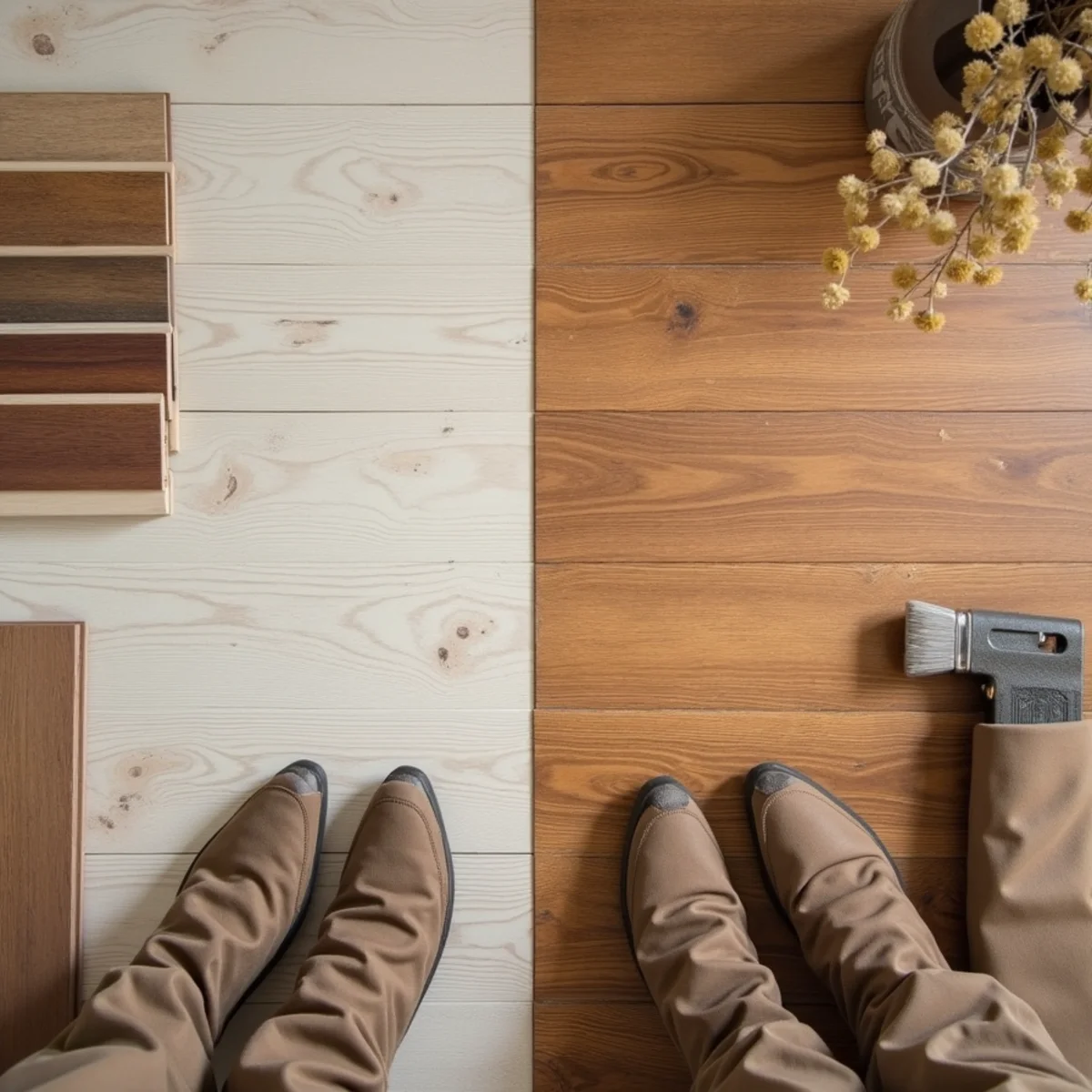
Refinishing is usually the cheaper, faster choice — when your wood is sound and thick enough to take it. Replacing costs more and takes longer because of new material and removal, but it is the right call when the boards are too thin, buckled or rotted, or when the subfloor needs work. The honest way to decide is to have the wood checked for condition and remaining thickness, then get an itemized written quote for each path so you can compare them on real numbers.
FAQ
Frequently asked questions
Services
Related flooring services
Service areas